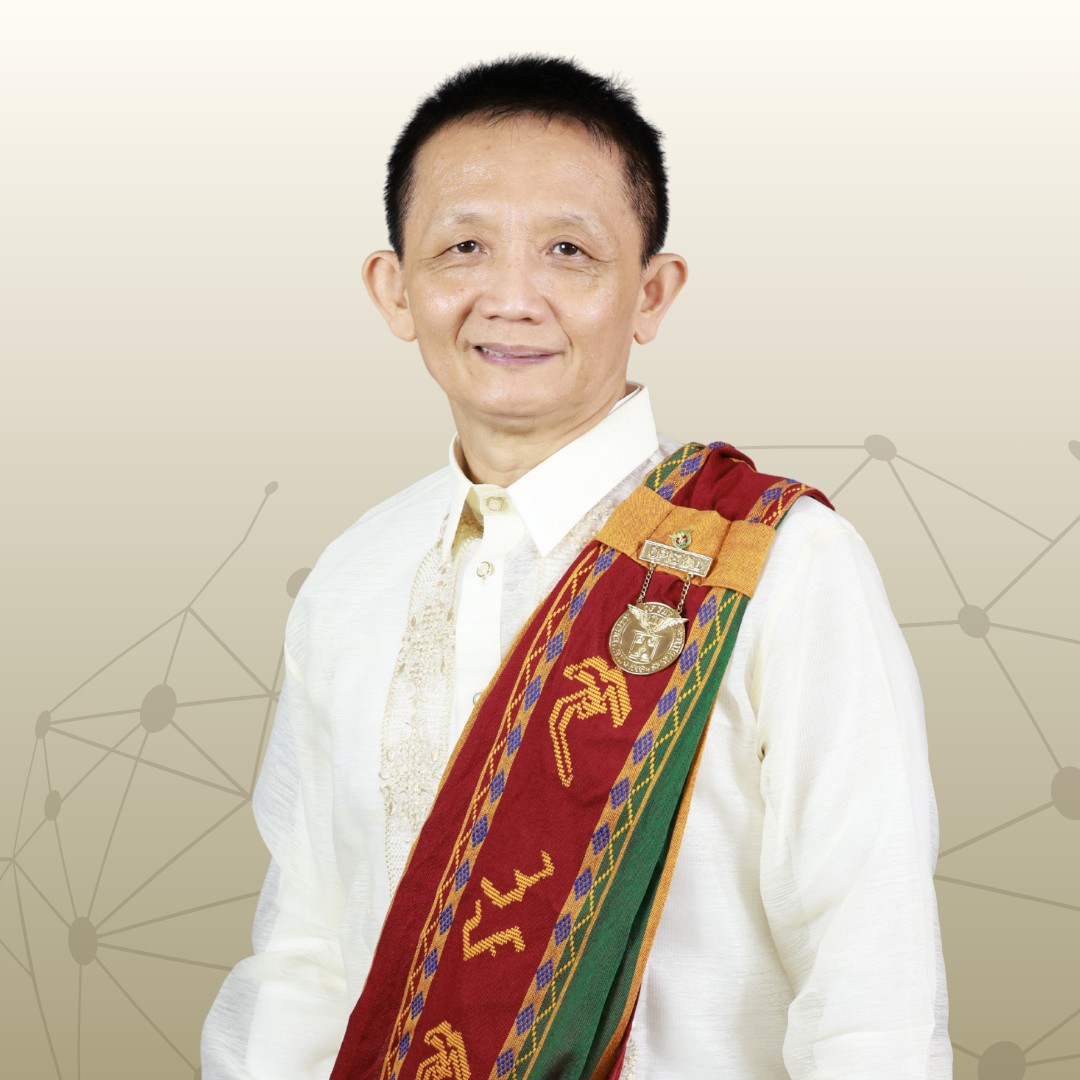
Two Problems, Two Game-Changers: How a UP Employee Built Systems that Serve People
He spotted two problems in the office. What he did next built three trailblazer information systems for UP.
17 August 2026 | Marianne Yzabelle P. Laron
QUEZON CITY, PHILIPPINES – When transacting with public institutions today, one can almost easily spot signals of systems and processes that have not caught up yet with the demands of modern work.
Forms filled out by hand. Requests lost between units. Workflows that take hours instead of minutes.
For some, these signals have become norms. For others, these are the starting point for further inquiry and action.

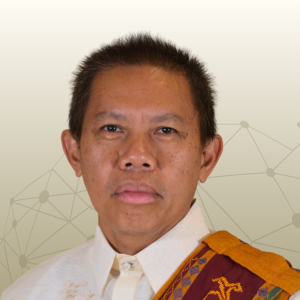
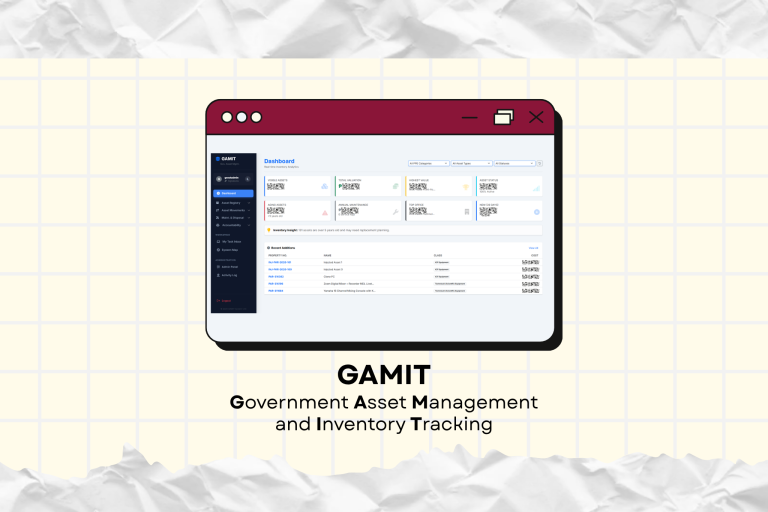
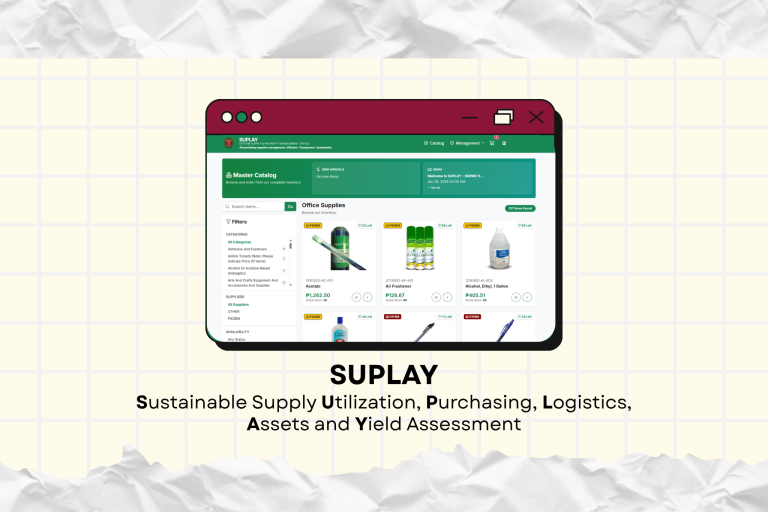
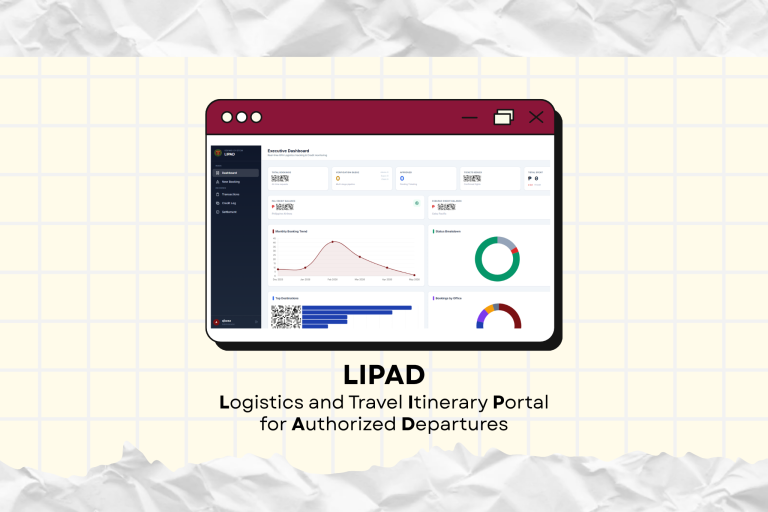
Aaron Christian Basa, Junior Office Manager of the University of the Philippines System Supply and Property Management Office, conceptualized, designed, and managed the deployment of three major information systems:
- GAMIT — Government Asset Management and Inventory Tracking. A platform that manages an equipment’s full lifecycle;
- SUPLAY — Sustainable Supply Utilization, Purchasing, Logistics, Assets and Yield Assessment. A platform that functions as an internal shopping center for office supplies; and
- LIPAD — Logistics and Travel Itinerary Portal for Authorized Departures. A booking portal built for efficient travel booking in the government.
With the help of these platforms, administrative staff in UP can now do the following:
- View an asset’s real-time location, assignment, and history, making institutional audits fast and fully transparent;
- Monitor stock levels in real time and submit digital supply requests, avoiding shortages and the need for manual, paper-heavy procurement tracking; and
- Book flights through an intuitive, end-to-end interface, allowing complete administrative monitoring, real-time settlement tracking, and balance management.
Each of these systems addresses a real, lived bottleneck. But before these came to fruition, they also came with struggles.
Two problems that inspired the transformation
Transforming systems for an institution as huge as UP was no small feat. One has to pay close attention to how things work around units – see what’s being done and what’s not.
Two problems kept showing up. First: most of the processes were still manual. Second: the tools built on Excel didn’t land well.
“Hindi siya na-receive ng ibang mga office and staff nang maayos,” he recalled. (It wasn’t received well by offices and staff”)
Instead of pushing harder, Aaron stepped back and asked more questions. Procedures had to be traced and the delays mapped. From that view, systems were rebuilt slowly and carefully, with other people in mind.
Two things that changed the game
After all the trials and experiments, two things made the difference.
- Designing with and for others
“Mas maganda kung intindihin ko yung pangangailangan ng office at ng process na yun, kaysa gumawa lang ako ng akin at i-apply ko sa kanila,” Aaron said. (“It is better to understand the needs of the offices and the processes, instead of creating things by myself, then applying it to others”)
He realized that building something useful and building something people will use are two different challenges. So instead of creating what made sense to him and applying it to others, people’s needs had to be understood first.
This approach gave not just a better perspective, but also renewed motivation to keep going when met with roadblocks and resistance.
- Putting AI to work
Building full software systems single-handedly would have made the load unsustainable. This compelled Aaron to maximize available digital tools, including artificial intelligence (AI).
AI executed what he had already thought through.
“Ako yung nag-iisip ng concept nung pag-develop ng system, paano siya tumatakbo, ano yung mga workflows, paano i-integrate itong mga APIs, ano yung kailangang makita ng user. Ang role ng AI sa akin is to execute yung plan ko,” he shared. (“I develop the concept, the system, its workflows, API integration, and user view, but AI comes in to execute my plans.”)
Protocols and guardrails were built around how AI was used in his workflow, so it did not go off-script. The result: being able to work on multiple projects simultaneously and at a pace that would otherwise be impossible.
AI truly made the work efficient. But it had to be matched with human judgment and clear direction.
The training that leveled him up
Aaron is an alumnus of the UP Office of the Vice President for Digital Transformation’s Dx Labs: AI for Institutional Transformation in UP Workshop, a four-month UP-exclusive training program on coding, context engineering, designing, and orchestrating AI agent systems.
“Sobrang dami pang kailangang ayusin. Oras na ring mag-adapt.” he emphasized. (“A lot has to be fixed, and it’s time to adapt.”)
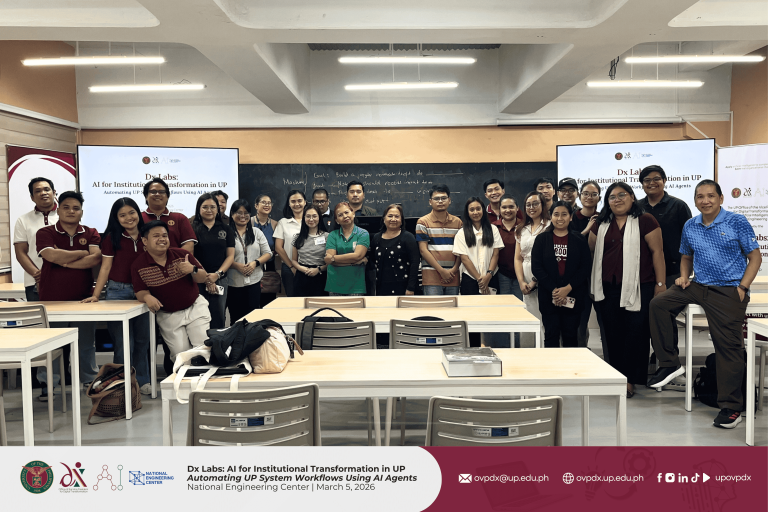
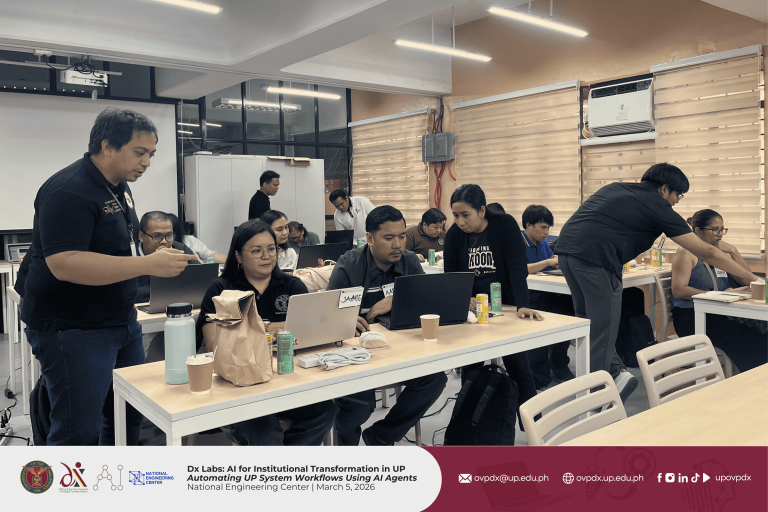
The training gave him structure and more exposure to tools, which are both vital for what he was already doing.
“The workshop provided exactly what we needed to bridge the gap between administrative necessity and modern digital solutions,” he said.
According to Aaron, by integrating AI into development workflows, they accelerated the development of digital ecosystems, transforming slow, manual processes into streamlined, automated workflows that directly elevate their institutional efficiency.
“So, ngayon, nakagawa ako ng iba’t-ibang AIs na may iba’t-ibang roles, na may iba’t-ibang personas, na yun yung nag-aasikaso sa iba’t-ibang projects, sa iba’t-ibang parts.” said Aaron. (“Now, I created different AI agents with different roles and personas, working on different projects and parts.”)
Each AI agent handles a specific domain, role, and rules.
His advice for anyone starting out
Aaron continuously pursues work in digital transformation. When asked what keeps him inspired, he points to two things: supportive leadership, and the quiet champions around him.
“Yung ibang staff na walang IT or digital transformation sa name nila or sa position nila, pero nagko-contribute pa din when it comes to modernization, digitalization, automation ng mga processes ng office at may mga nagagawa ring mga mini system.” he shared. (“You’ll see staff who don’t have IT or digital transformation attached to their names or positions, but who contribute to modernization, digitization, and automation in the office, creating their own mini systems.”)
For young professionals who want to do the same, he advises doing three things:
- Observe and analyze problems. Then build towards solutions, little by little.
- Brainstorm with tools and people. Digital transformation does not work in isolation from resources, systems, and who it serves.
- Work with your leaders. Asking for support matters.
This story supports these realities: 1) technology fixes work hand in hand with mindset shifts, and 2) technology should serve the people.
Mere signals became systems that help their office work faster, easier, and more confidently.
Interested to know other digital transformation champions’ work in UP? Follow this #DxDiaries series at: https://www.facebook.com/upovpdx. For more information, reach out to the UP OVPDx email at: [email protected].